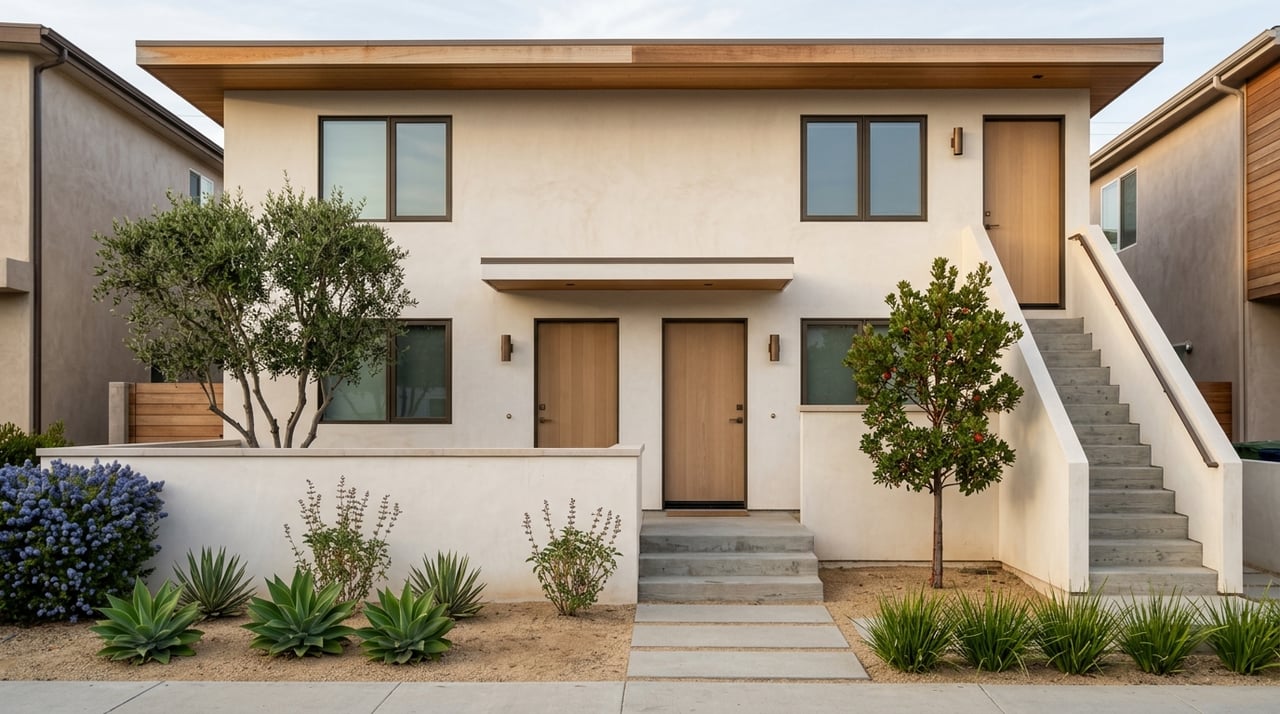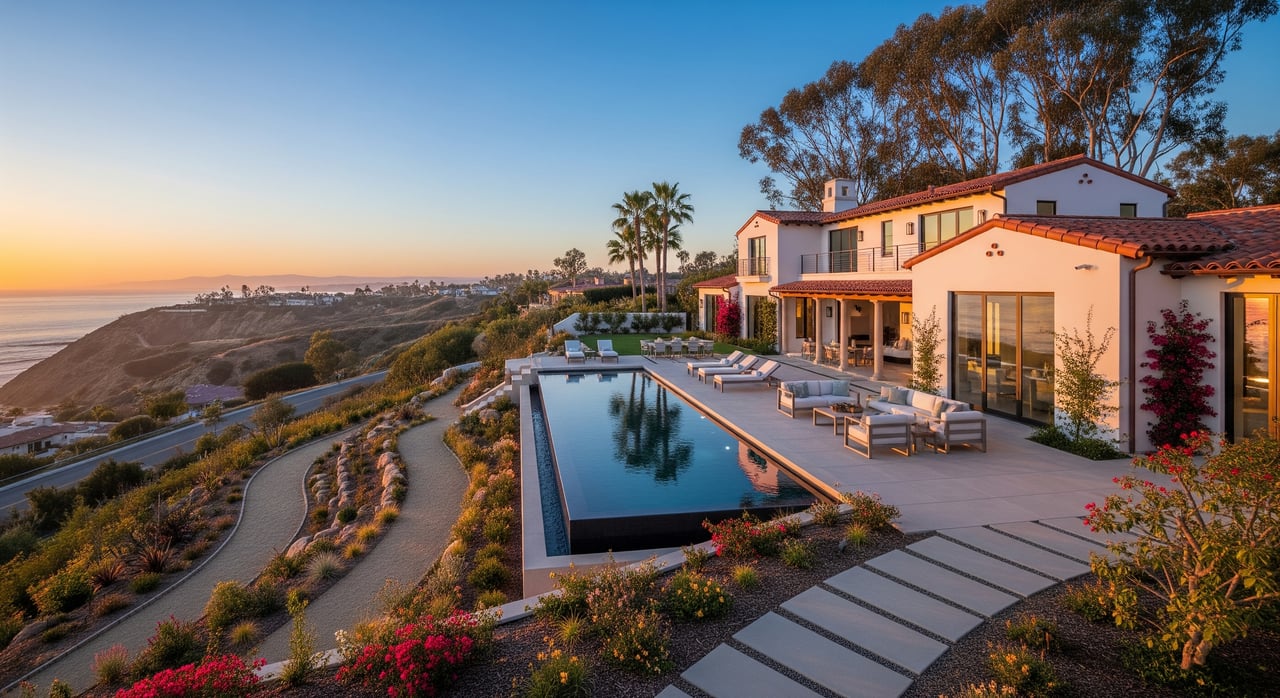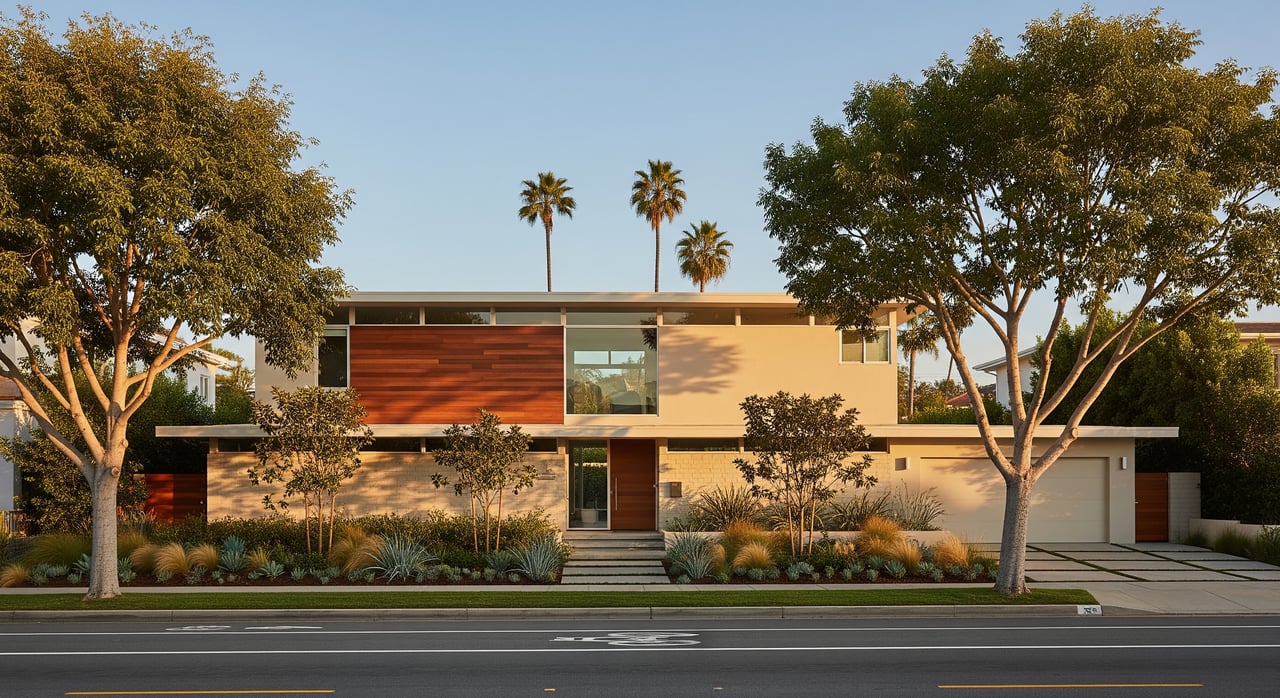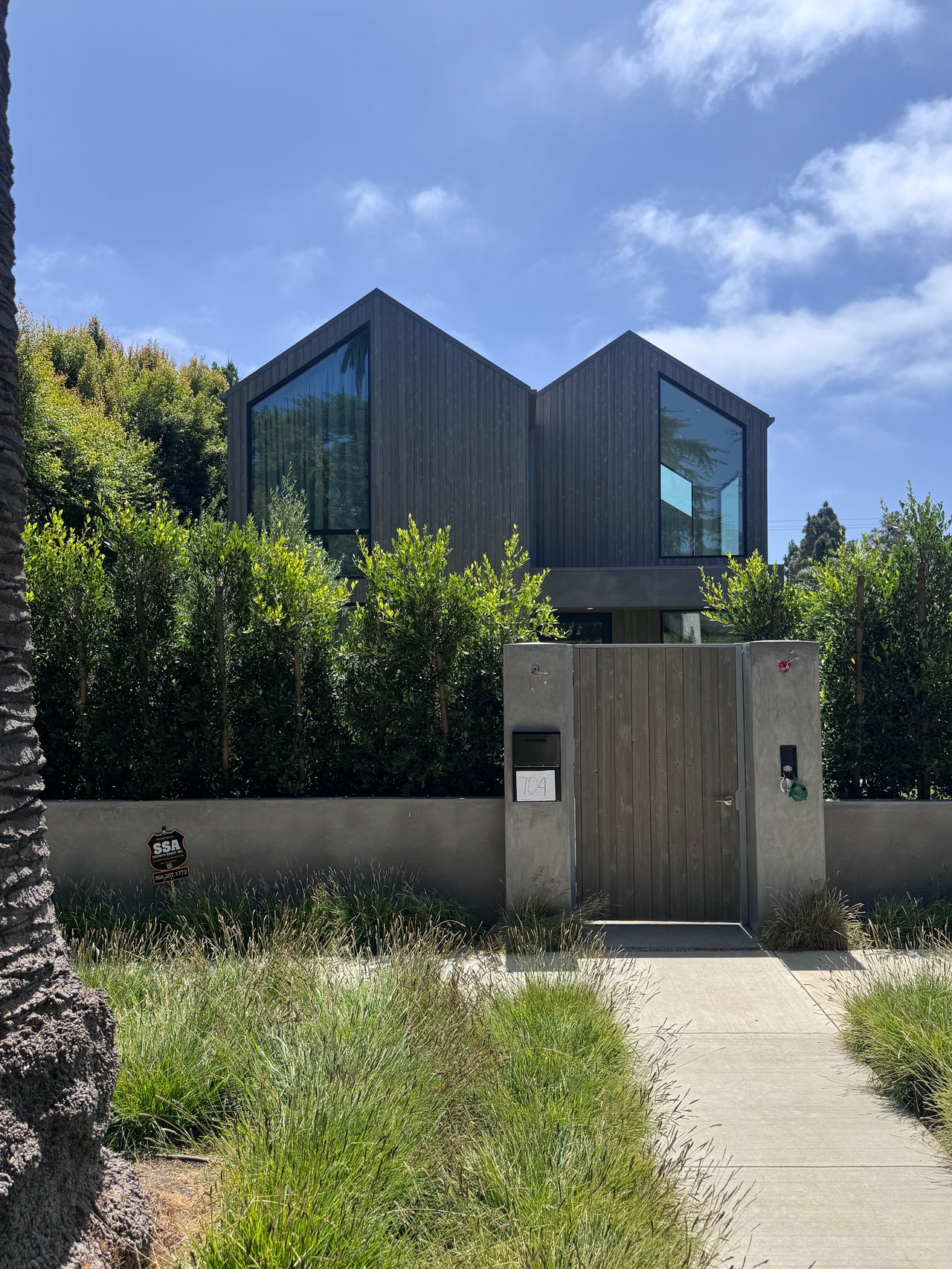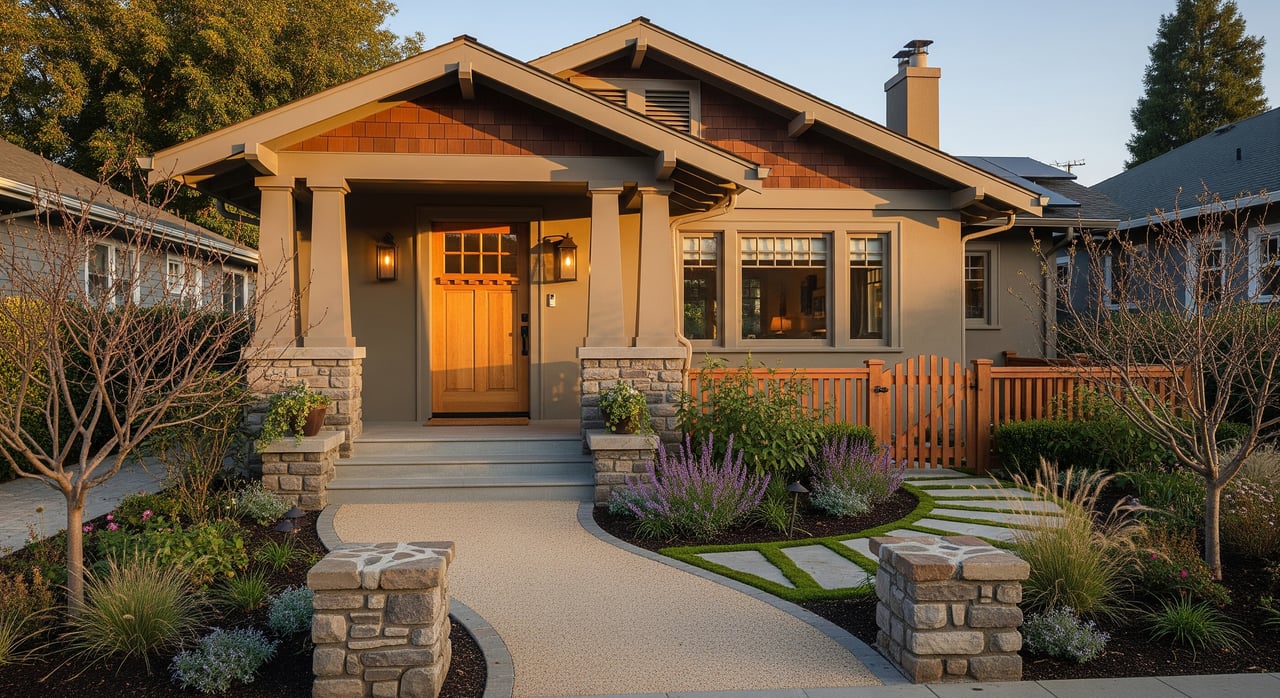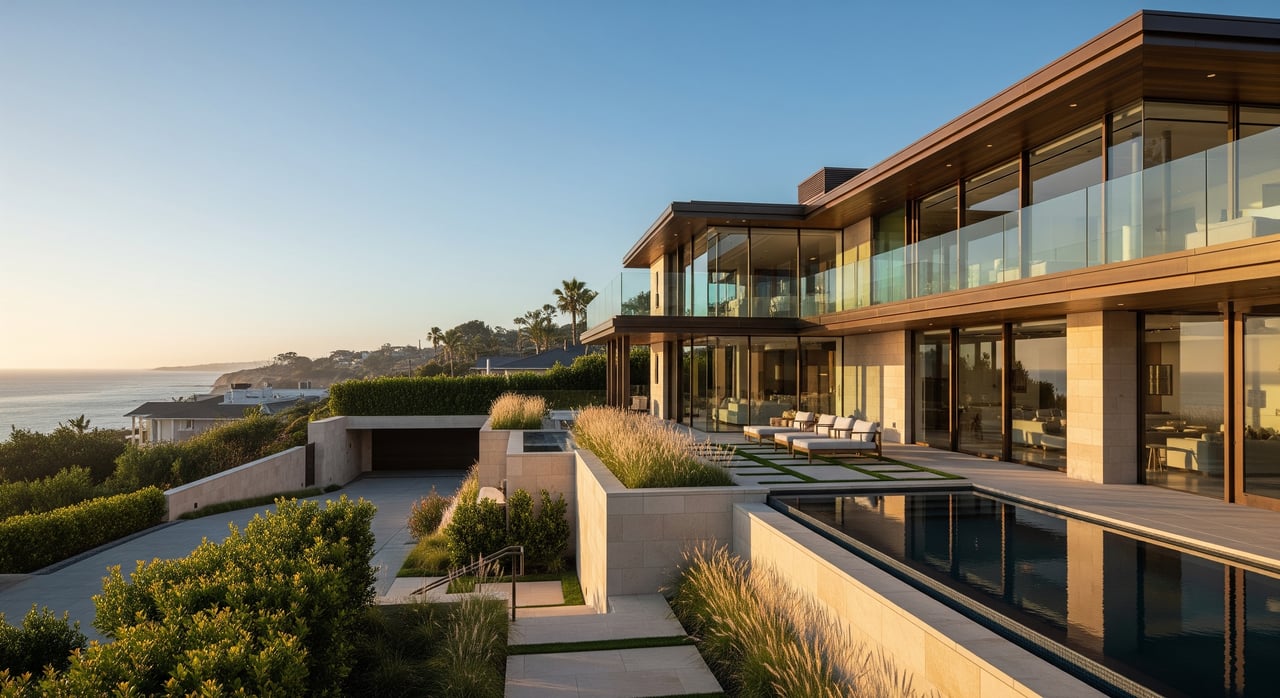
A buyer walks two listings in Palos Verdes Estates on the same afternoon. Both sit on roughly similar-sized lots. Both are priced within a few percentage points of each other. The listing agent for the larger parcel mentions, almost in passing, that there's plenty of room to add a primary suite down the line. The buyer assumes that's just how it works here: more land, more house, eventually. It isn't. In Palos Verdes Estates, how much house you're allowed to build has almost nothing to do with what feels intuitive about lot size, and almost everything to do with a formula written into a private covenant a century ago.
That covenant belongs to the Palos Verdes Homes Association and its Art Jury, the design-review body that has governed exterior changes in Palos Verdes Estates since 1923. Most buyers hear about the Art Jury when they're already deep into escrow, usually from a contractor explaining why a remodel will take longer than expected. Fewer buyers realize the Art Jury's authority starts even earlier than that, at the moment someone is comparing two lots and guessing which one has more room to grow.
The formula nobody puts on the listing sheet
The Homes Association traces back to 1913, when New York banker Frank Vanderlip bought the land that would become the Palos Verdes Peninsula, envisioning something closer to the Italian coastline than a typical Southern California subdivision. To protect that vision, the Basic Protective Restrictions were recorded in 1923, the same year the Art Jury was established. Those restrictions still govern more than 5,500 properties across Palos Verdes Estates and the Miraleste neighborhood of Rancho Palos Verdes today.
Buried in that century-old framework is a floor-area formula that determines the maximum square footage a house on a given lot is allowed to reach, including the garage. It's the smaller of two numbers: 30 percent of the lot size plus 1,750 square feet, or 50 percent of the lot size. Whichever produces the lower figure wins.
That "smaller of" clause is the part that changes how a buyer should think about lot size. Run the math on two hypothetical Palos Verdes Estates lots.
| Lot size | 30% + 1,750 sq ft | 50% of lot | Allowable floor area |
|---|---|---|---|
| 6,000 sq ft | 3,550 sq ft | 3,000 sq ft | 3,000 sq ft |
| 12,000 sq ft | 5,350 sq ft | 6,000 sq ft | 5,350 sq ft |
Notice which rule wins in each row. On the smaller lot, the 50 percent cap binds, meaning every additional square foot of land buys half a square foot of house. On the larger lot, the flat 1,750-square-foot bonus rule takes over, and every additional square foot of land only buys three-tenths of a square foot of house. The crossover happens right around 8,750 square feet of lot area. Below that line, land is doing more work for the buyer's expansion potential. Above it, the same acre of dirt pays off at a noticeably lower rate.
This isn't a quirk of one address or one architect's plan. It's the standard formula the Art Jury and the city apply across Palos Verdes Estates, and it means the intuitive shortcut of "bigger lot equals more house" quietly breaks down right around that 8,750-square-foot threshold. A buyer comparing a 7,000-square-foot lot to a 14,000-square-foot lot isn't comparing two points on the same line. They're comparing two different rules.
A private government most buyers don't see coming
The Art Jury isn't a city planning committee, though it works alongside one. It's a nonprofit governed by a board of property owners, funded by fees the Homes Association charges homeowners directly for project review, typically ranging from $1,000 to $15,000 depending on scope, separate from any city permit fee. Every exterior change in Palos Verdes Estates, from a repainted trim color to a new roofline, needs its sign-off before city permits can move forward.
That authority has drawn scrutiny. In a March 2026 investigation, ABC7 spoke with Palos Verdes Estates homeowner Jim Sheriff, who described the frustration of dealing with a body whose reach extends further than many residents expect. "If it's on the outside of your house, we're going to control it," Sheriff said, describing the Art Jury's stance on exterior work, even changes some homeowners feel are barely visible to anyone else. Courts have generally upheld the Homes Association's authority to enforce its covenants, and residents who spoke with ABC7 noted the process has remained largely unchanged for nearly a century.
For a buyer, the practical risk isn't the debate over whether the system should change. It's what happens when a previous owner skipped the process. Unapproved exterior work, an addition, a re-roof, a hardscape project done without Art Jury sign-off, can result in a lien against the property, and that lien can cloud title at the exact moment a sale is trying to close. Simple projects typically clear Art Jury review in two to eight weeks. Major remodels, second stories, and new construction can take three to nine months or longer, especially if a project needs multiple review cycles.
There's a second, quieter layer to this. City documents note that setbacks on residentially zoned Palos Verdes Estates property remain governed by whatever covenant was recorded on that specific lot as of July 27, 1993, unless a variance has since been granted. That means two neighboring lots can carry different setback rules depending on when their paperwork was filed, a wrinkle that has nothing to do with the floor-area formula but adds one more reason the same lot size can mean different things on different streets.
What this looks like against today's market
By July 2026, the median sale price in Palos Verdes Estates sat at $3.0 million over the trailing three months, per Redfin, essentially flat compared with the same period a year earlier, with homes going pending in around 46 days. Zillow's home value index told a slightly different story over the same window, estimating the average home value at $2,784,662 as of July 31, 2026, up 3.0 percent year over year. Earlier in the year, in February 2026, the market showed clearer signs of a shift toward buyers: the sale-to-list ratio had dropped to 97.69 percent, and zero percent of homes sold above asking price, down from 20 percent the year before.
Put together, that's a market where a rising value estimate and a softening negotiating position exist at the same time. That combination matters for the expansion-headroom question. In a hotter market, buyers often pay for potential without checking the math on whether that potential is real. In a market where sellers are working harder to hold their asking price, a buyer who understands the actual floor-area formula has a concrete, verifiable reason to push back on a listing that's being marketed around future square footage it may not be entitled to reach.
What to check before you write an offer
If a Palos Verdes Estates listing is being pitched partly on its room to grow, a few questions are worth asking before that potential gets baked into an offer price.
- Ask the Homes Association for the property's current allowable floor area worksheet, not an agent's estimate of it
- Confirm whether the lot's existing structure is already close to its formula-based ceiling, which changes what "room to expand" actually means
- Check whether the property's recorded setbacks predate the July 1993 covenant reference point, since older restrictions can differ from what applies next door
- Request documentation of Art Jury approval for any past exterior work, since unpermitted changes can carry a lien that surfaces during title search
- Budget for review timelines separately from construction time, since a major addition can take three to nine months to clear Art Jury review before a shovel goes in the ground
None of this makes Palos Verdes Estates a harder place to buy well. It makes it a place where the math behind a listing is worth pulling apart before assuming the obvious story is the true one.
FAQ
Does the floor-area formula apply if I want to build an ADU instead of expanding the main house? State ADU law limits how much a homeowners association like the Art Jury can restrict accessory dwelling units, but objective design standards, like materials and setbacks, can still apply. It's worth confirming current thresholds directly with the Homes Association before assuming state law overrides local design review entirely.
I'm looking in Miraleste, which is technically part of Rancho Palos Verdes. Does any of this apply there? Yes. The Palos Verdes Homes Association and Art Jury have jurisdiction over Miraleste as well as Palos Verdes Estates, since both were part of the original Palos Verdes Project before the two cities incorporated separately.
Understanding a lot's real expansion ceiling, not just its listed square footage, is exactly the kind of groundwork a design-minded search benefits from. If you're comparing Palos Verdes Estates properties and want a clear read on what a specific lot can actually support before you write an offer, Steinbeck Homes can help you look past the listing sheet and into the math that governs it.