Five days ago, a small group of Santa Monica residents met at 3201 Airport Avenue for a walk most of them had never taken before, even though many drive past the destination every week. The Santa Monica Mountains Fund hosted "Imagining Santa Monica's Next Great Park" on Saturday, August 8, 2026, and the route wasn't a construction site or a rendering on an easel. Michael Brodsky led the group through the history, present, and future plans for the park, stopping at the Airport Avenue Demonstration Gardens, where National Park Service Plant Ecologist and Vegetation Branch Chief Joey Algiers introduced the native plant communities of the Santa Monica Bay region. Then the walk continued to the airport's own observation deck, the same spot where advocates have stood for a decade pointing at asphalt and describing a park.
Santa Monica Airport's future is often discussed in terms of its planned closure: a 2017 agreement between the city and the FAA keeps the airport operating through the end of 2028, after which conversion of the 192-acre site is planned. The demonstration gardens and the city's plans for the site are also part of the picture for nearby residents. A piece of the future park has existed since long before this year's headlines, and the city's draft framework for the rest of the site is already laid out, district by district, well ahead of any ribbon cutting.
The Garden That's Already Rehearsing the Answer
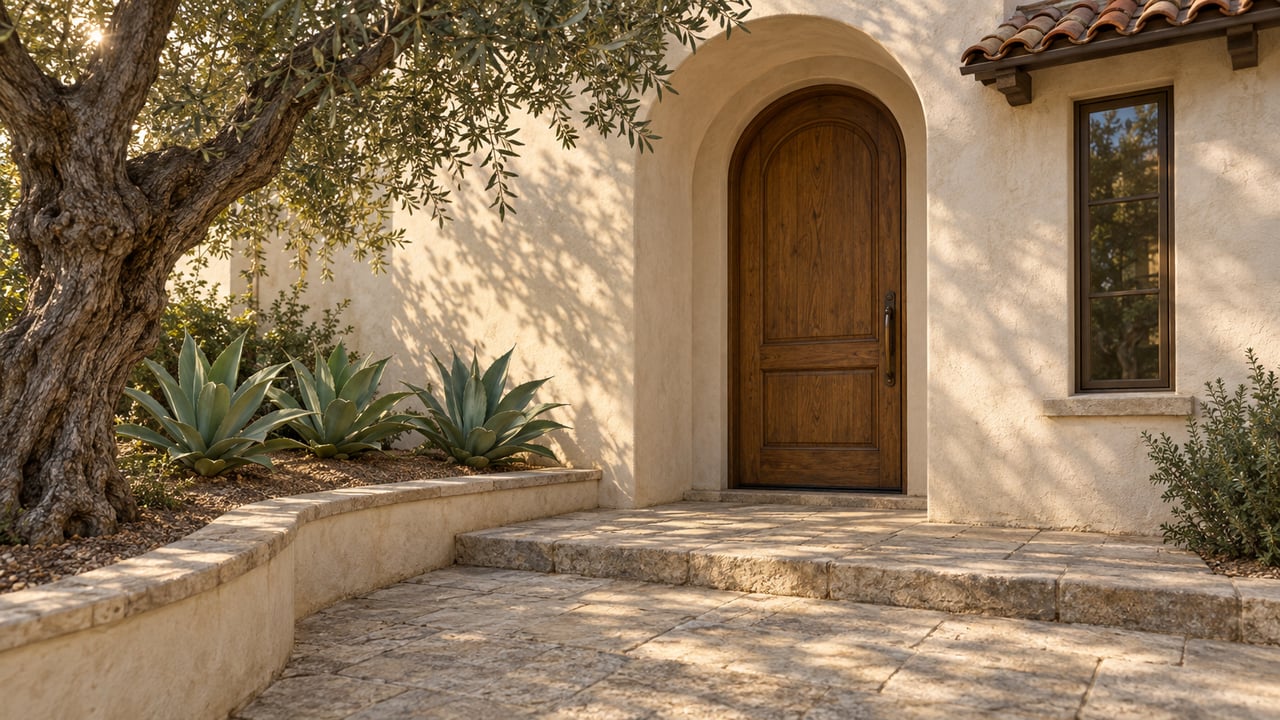
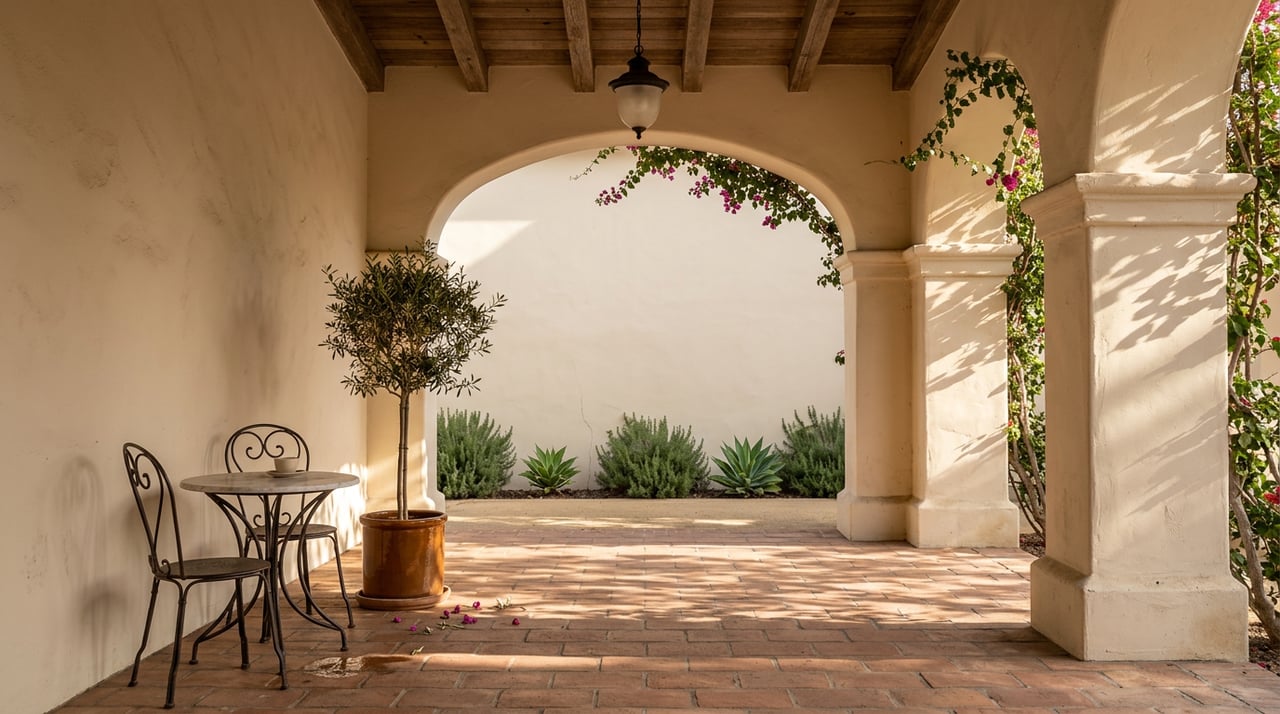
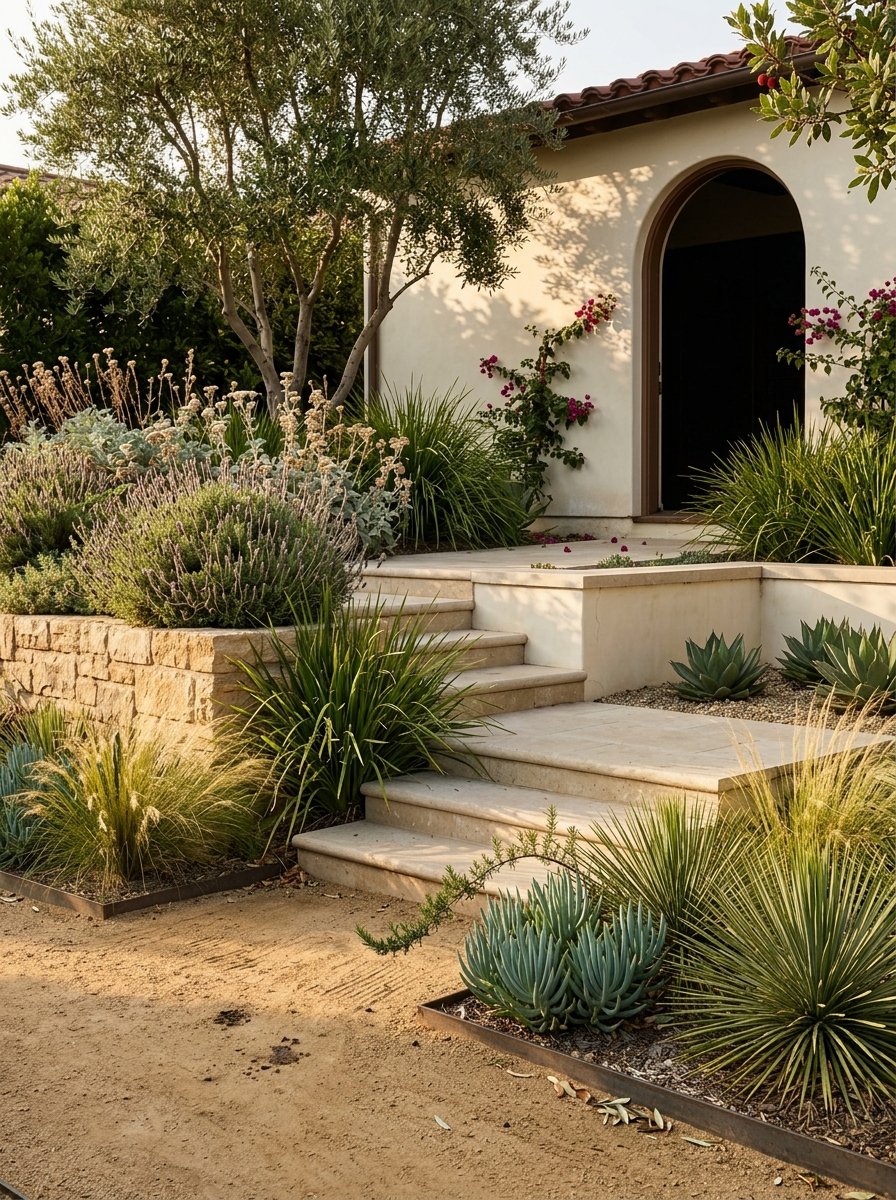
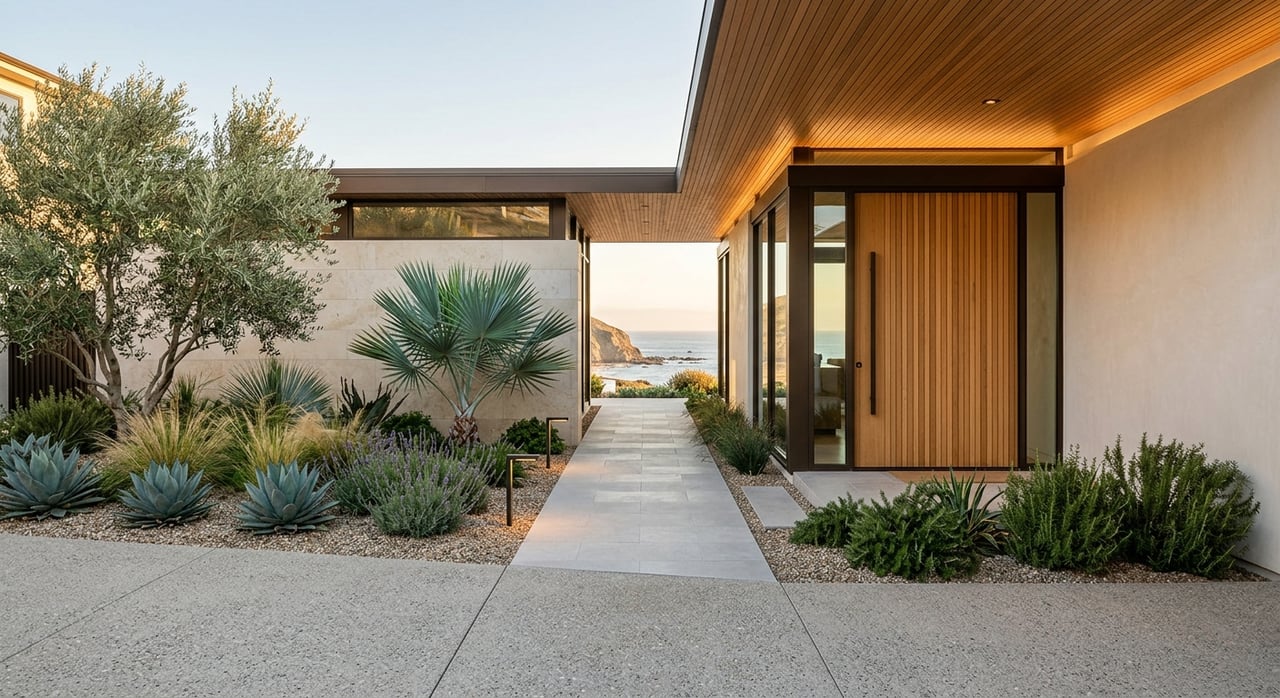
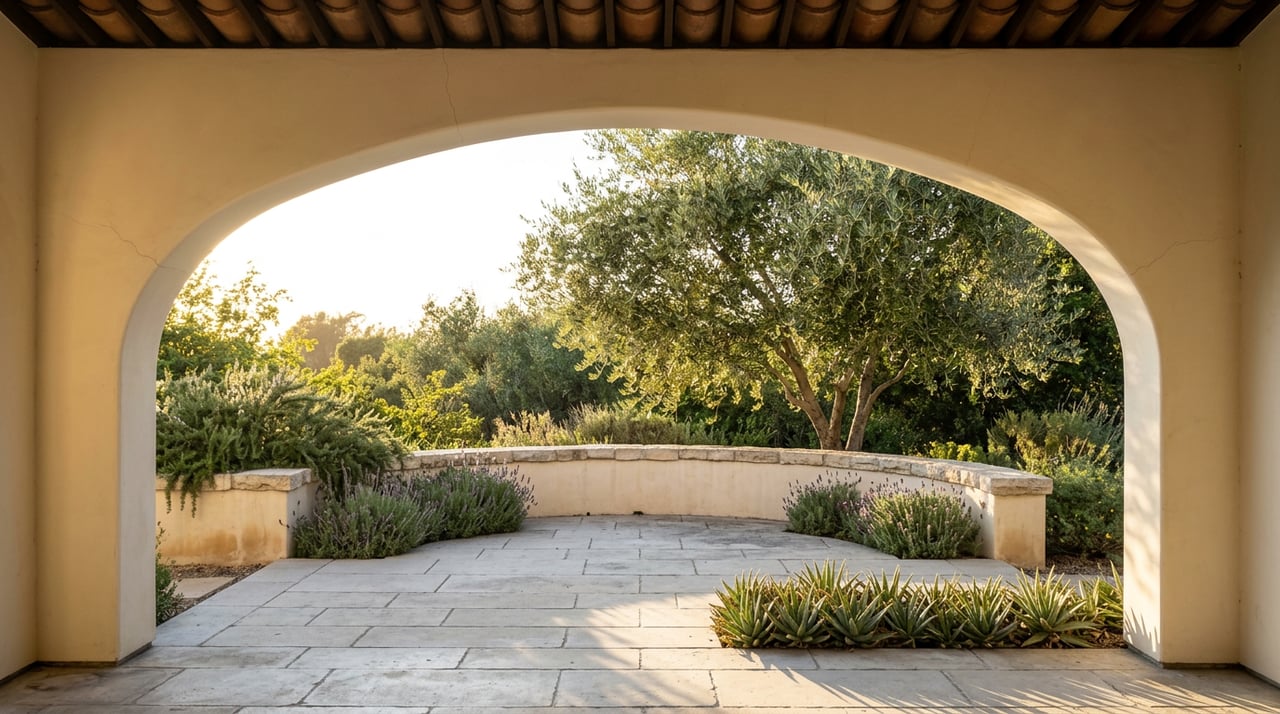
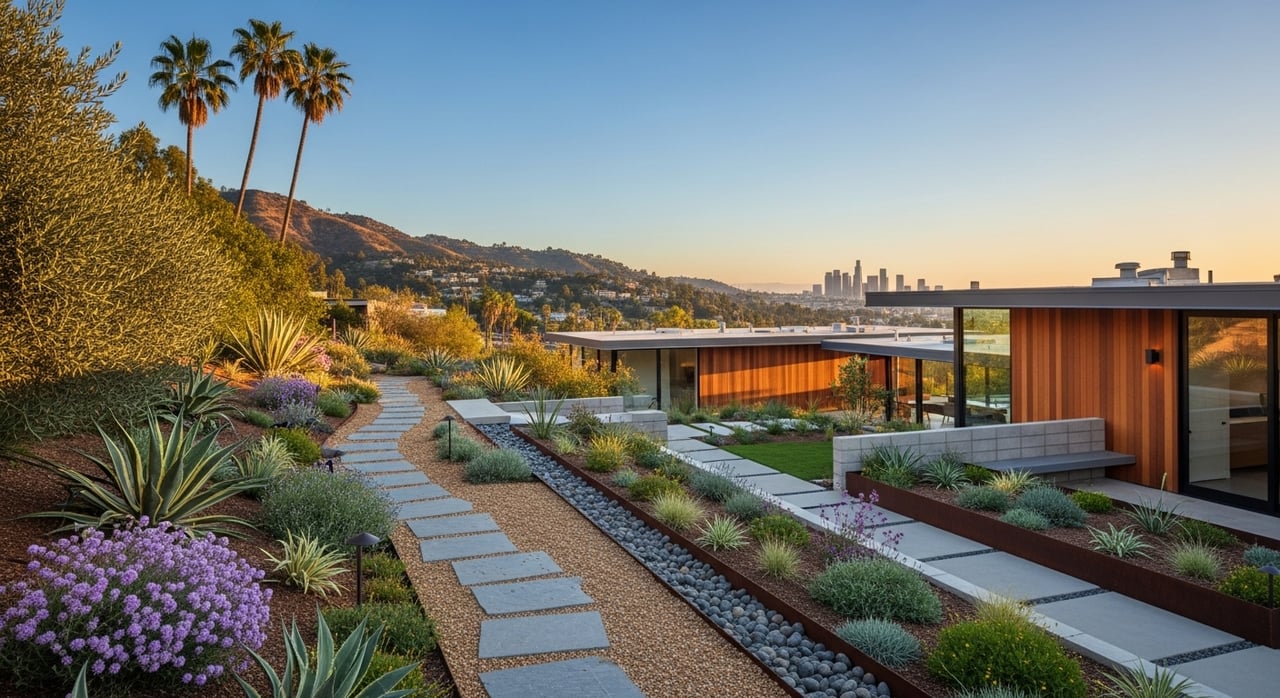
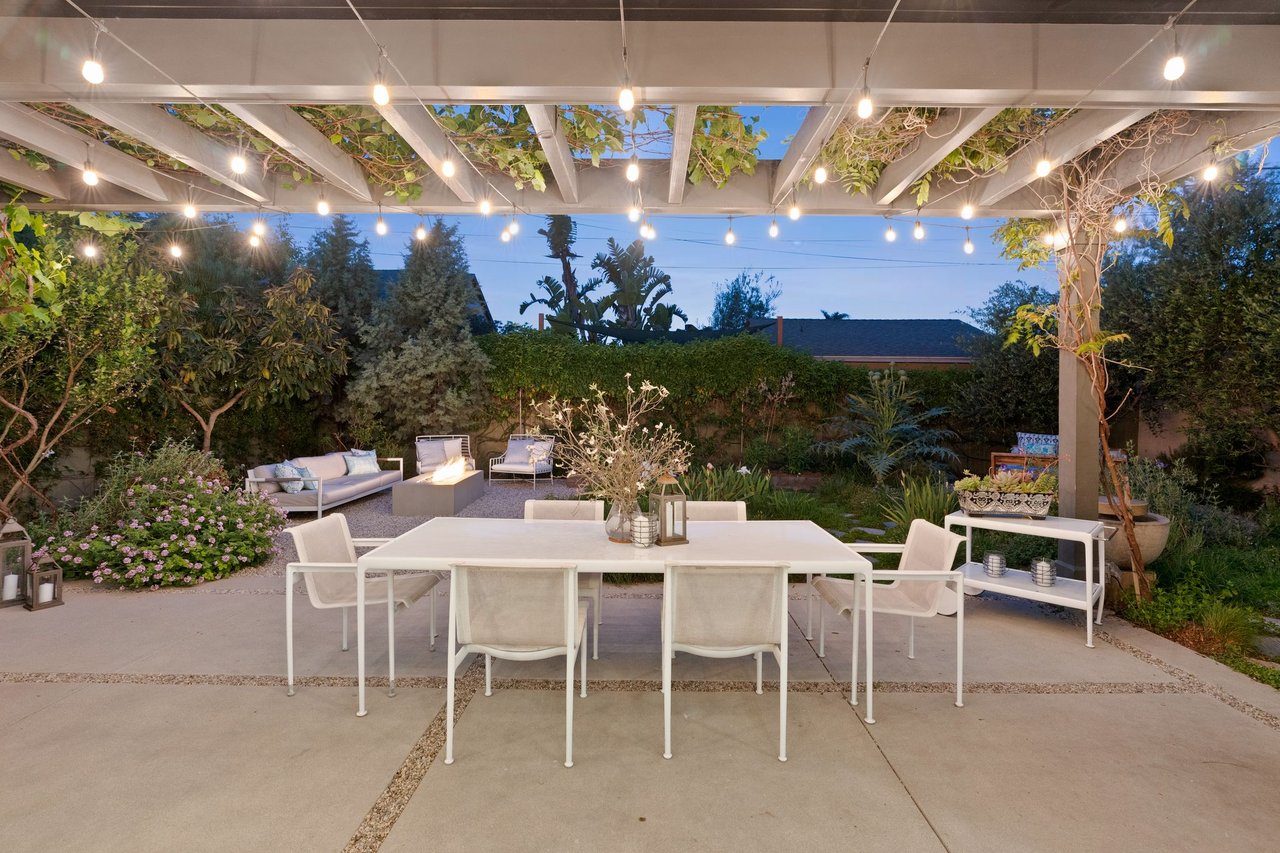
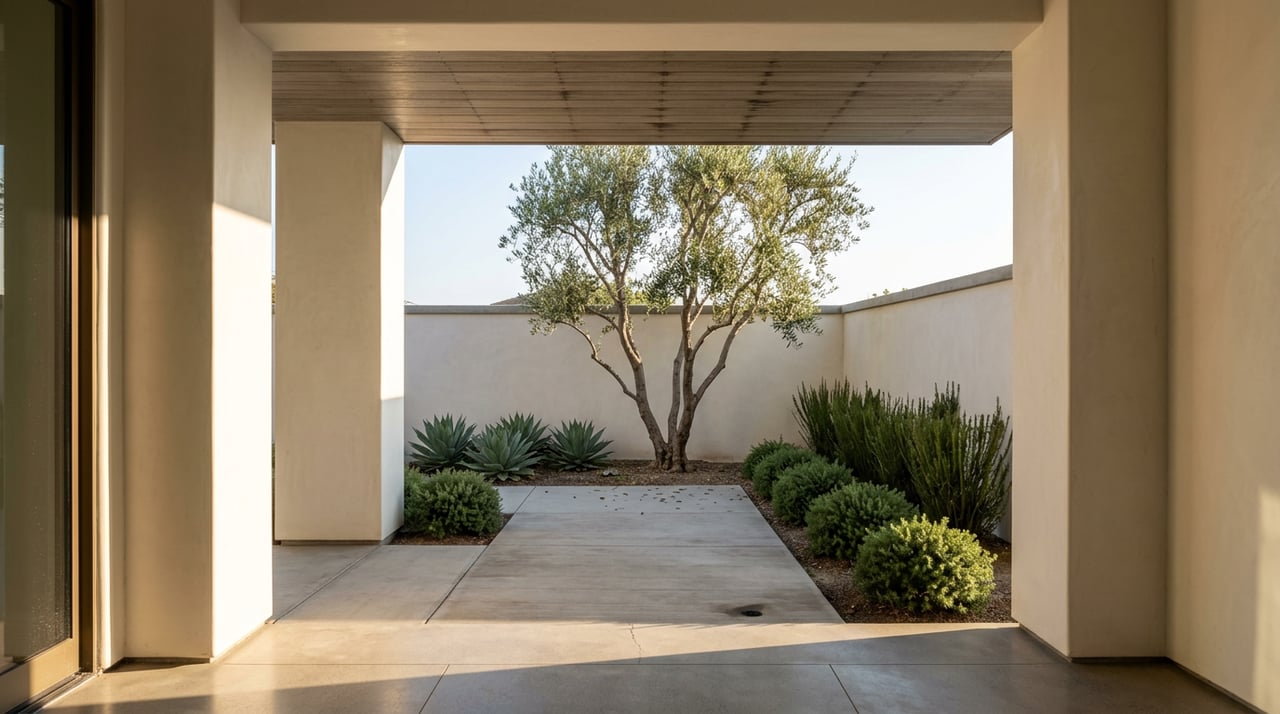
If you've eaten at The Cloverfield and never noticed what's across the street, you're not alone. Three demonstration gardens sit side by side at Santa Monica Airport, just across from the soccer fields at Airport Park, using a mix of California native plants and other drought-tolerant species to demonstrate three garden functions: Play, Relax, and Entertain, as part of the city's environmental and sustainability work. The paths are recycled concrete, built for permeability so water soaks into the ground instead of running off.
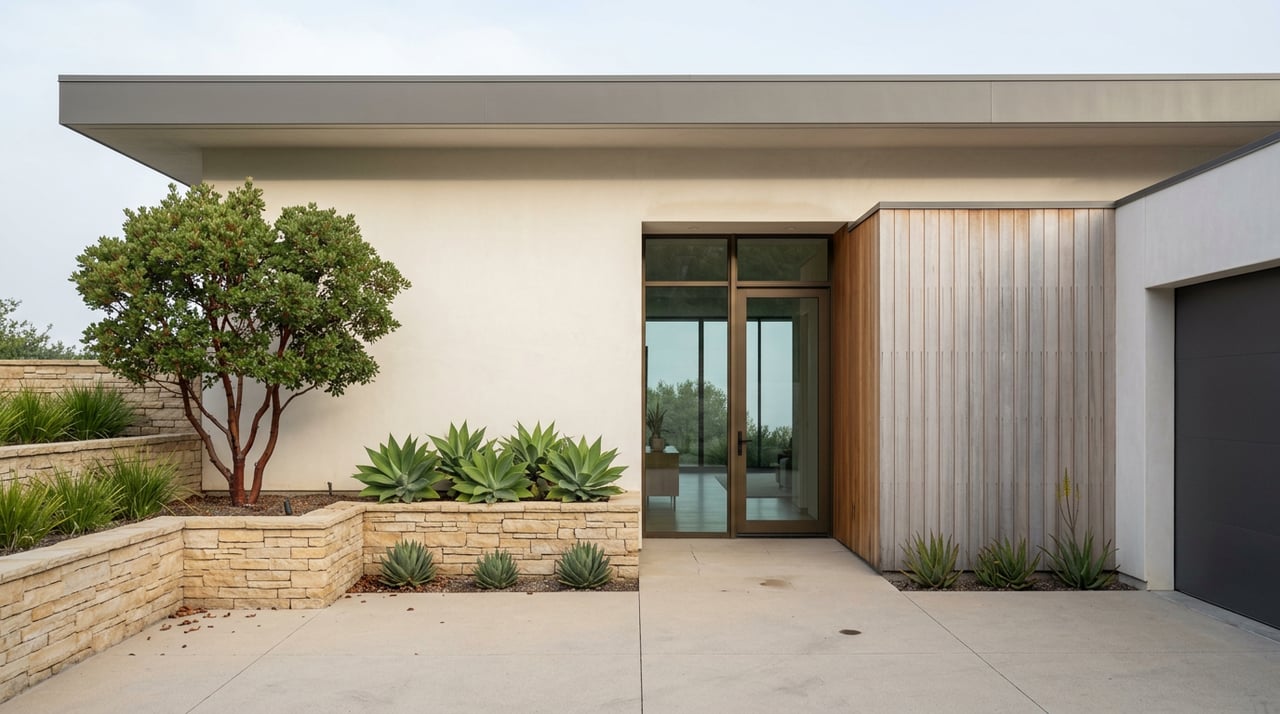
It's not a purist's native garden, and that's worth knowing before you go looking for one. The Play garden leans on eastern redbud and the Entertain garden on western redbuds, both mixed alongside true regional natives like Pacific madrone with its distinctive red bark. As a design exercise, that mix is the point. The gardens were built to show what a water-conscious yard can look like when it borrows from several palettes rather than insisting on one, which is precisely the tension now playing out at ten times the scale across the rest of the airport property.
Eight Neighborhoods for One Runway
The city released a draft Framework Diagram for the Santa Monica Airport Conversion Project after nearly two years of public outreach that included 87 public meetings, 20 small group discussions with more than 370 participants, over 12,100 online survey responses, and more than 50,000 project website visits. That is not a light-touch survey. It's the kind of input volume that shapes a plan more than any single agency memo could, and the result reads less like a park than a small planned district.
The framework organizes the site into eight distinct but interconnected districts, each with its own character, uses, and identity:
- Immersive Nature, a calm ecological area centering native habitat, biodiversity, and slower-moving open space on the west side of the site
- Active Sports, a district on the east side built around multi-use fields, aquatics, basketball, tennis, pickleball, baseball or softball diamonds, volleyball, skate facilities, and bike-oriented amenities
- Arts & Culture, organized around food, performance, and creative expression, with possible galleries, community theater, artist studios, museum space, and food hall or food truck uses
- Urban Edge, built around adaptive reuse of existing structures along the north side, with concepts like a youth center, senior center, daycare, and library
- The Stroll, a welcoming green gateway serving as the park's front door from the Clover Park area
- The Lawn, a flexible central gathering space meant to work as the park's living room
- The Meadow
- The Heart
The last two haven't had their specific programming spelled out publicly yet, but the pattern in the first six tells you almost everything. Planners describe a "calmer neighborhood character" emerging on the west side of the site and a "more active, regional character" on the east. That isn't accidental proximity planning. It means the quiet end near existing residential streets stays quiet by design, while the noise, lights, and crowds of sports fields and food halls get pushed toward the opposite edge. Neil Carrey, president of the Santa Monica Airport2Park Foundation, put it more simply after the framework's release, as quoted by Santa Monica Next: "It's as if we are getting eight parks in one."
The Number That Explains the Scale of This
It's easy to read "192-acre park" and picture something like an oversized Palisades Park. The comparison that actually lands is different. Combined with adjacent Clover Park and the airport's existing sports fields and dog park, the site would create the largest park in Santa Monica, or the entire Westside, at well over twice the size of all other Santa Monica parks combined, and nearly a third the size of New York's Central Park, according to the Airport2Park Foundation.
The city's own parks math backs up why that scale matters here specifically.
| Metric | Current | City's target |
|---|---|---|
| Parkland per 1,000 residents | 1.5 acres | 5 acres |
The City Council unanimously approved a 2025 Parks and Recreation Vision Plan setting a goal of five acres of parkland for every 1,000 residents, a standard considered a baseline for cities but one that would represent more than tripling Santa Monica's current park acreage. A single site delivering that jump is unusual for a city this built out. There's no comparable undeveloped parcel left to draw from, which is part of why the framework process pulled in tens of thousands of comments instead of the handful a typical park redesign might get.
The Clock Everyone Agrees On, and the One Nobody Does
The closure date isn't in dispute. The city has the option to close the 192-acre general aviation field at the end of 2028 under the consent decree reached with the Federal Aviation Administration, and city leadership has reaffirmed that plan repeatedly. What's still unsettled is whether every acre of that land stays parkland.
A separate citizen initiative, filed in January 2026 and backed by hospitality union UNITE HERE Local 11, sought to set aside a quarter of the site for income-restricted housing while keeping the rest as park space. That measure needed roughly 7,000 signatures to reach the November 2026 ballot. Supporters had until mid-June 2026 to submit those signatures and did not meet the deadline, with organizers saying they would keep collecting toward a possible spot on the November 2028 ballot after a fresh signature push that had been aimed at submitting by August 12, 2026. That date was yesterday. Whatever happens with it, the park-only framework process, complete with its surveys, district diagrams, and demonstration gardens, keeps moving on its own separate track regardless of how that specific vote lands.
Back in 2014, more than 60% of Santa Monica voters approved Measure LC, the charter provision that first tied the airport's closure to a park-only future. Every framework decision since has had to work inside that boundary, which is a big part of why the district plan reads as carefully sequenced rather than improvised.
How to See It Before It's Finished
You don't need to wait for a groundbreaking to have an opinion about any of this, and you don't need to wait for one to enjoy a piece of it. The Airport Avenue Demonstration Gardens are open now, free, and largely unadvertised, tucked across from the soccer fields where most people are watching a game rather than looking at what's growing along the fence line. Guided walks like the August 8 event tend to be organized by groups like the Santa Monica Mountains Fund and the Great Park Coalition rather than the city itself, so watching their event listings is a better bet than checking a municipal calendar.
For a city built almost entirely on infill, watching a 192-acre site get designed from scratch, district by district, guiding principle by guiding principle, is not something Santa Monica residents get to do twice. Whether you land on the side of more athletic fields, more open habitat, or some housing carved out of the edges, the framework rewards paying attention now rather than showing up to a finished ribbon cutting with questions nobody's asking anymore.
Johannes Steinbeck has spent his career treating good design and careful presentation as the thing that reveals a property's real value, whether that's a single house on the Peninsula or a public site the size of a small neighborhood. If this year's park news has you thinking more seriously about your own footing in Santa Monica, whether that means understanding how a project like this could shape a specific block or simply wanting a clearer sense of what your current home is worth in a city that's about to change its skyline of open space, Steinbeck Homes is a good place to start that conversation.