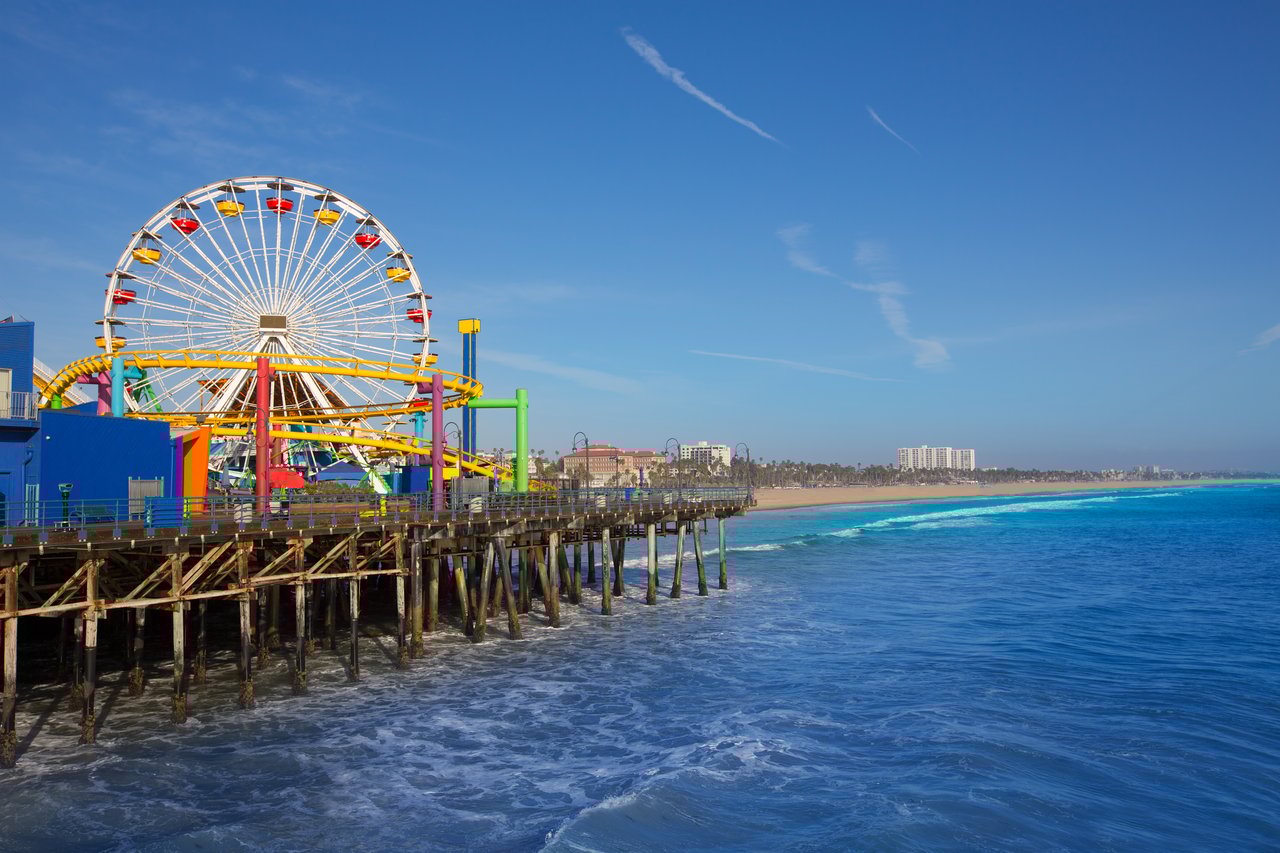
Walk out to 256 Santa Monica Pier today and the marquee still says what it said the week Rusty's Surf Ranch closed its doors. "Farewell My Friends" on one side. "Thanks for the Good Times" on the other. A third line thanks the community for 31 years. That sign has now outlasted the business it was announcing the end of by longer than most Pier tenants get a lease term.
If you've walked past that space anytime in the last year and wondered whatever happened to the new restaurant that was supposed to move in, you're not missing something. The proposed lease did not ultimately proceed.
What Was Supposed to Happen
In late 2025, word went around that the vacant space would become The California Roadhouse, a Route 66-themed restaurant and live music venue from Sean Ahaus, a Santa Monica native and co-owner of Vito Restaurant, the neighborhood spot on Ocean Park Boulevard that's served the community for more than 45 years. The pitch had good timing built into it. The Santa Monica Pier is the marked western terminus of Route 66, and 2026 is the highway's centennial year. Ahaus set an opening date of March 20, the first day of spring, weeks ahead of the citywide Route 66 celebrations planned for April. The branding leaned all the way in: "The Last Great American Roadhouse at the end of Route 66."
According to the Santa Monica Daily Press, the concept was picked from nine competing proposals after more than 100 initial inquiries, and city staff liked it partly because it promised to activate the space fast, including free performances during construction. The plan called for daily live music, karaoke, trivia nights, and partnerships with music schools like the Musicians Institute for student recitals. The proposal offered the Pier a mix of live music and other programming.
March 20 came and went with the space still empty.
The Labor Provisions
The dispute centered on labor provisions in the proposed lease.
The city's staff report on the proposed lease stated that workers displaced when Rusty's closed didn't actually qualify for protection under Santa Monica's worker retention ordinance, because they lost their jobs before the ordinance took effect. California courts have generally rejected retroactive application of ordinances like that one. Staff acknowledged as much in writing.
And yet the lease that eventually went to City Council built a parallel framework anyway: structured interviews for former Rusty's employees, mandatory minimum hiring percentages, and a 90-day retention guarantee for anyone rehired. Ahaus said he wasn't opposed to bringing former workers back. The Santa Monica Daily Press reported that he expected to rehire "90 to 100%" of them once he'd actually met and interviewed people. His objection was to the enforcement mechanism itself, a provision included in the lease for a business the ordinance didn't legally cover.
The lease included worker-retention provisions for the incoming tenant. Unite Here Local 11, the hospitality union that had previously organized the Rusty's workforce, was involved in discussions about those provisions.
Lease Negotiations and a Possible Move
The timeline traces the lease process.
| Date | What happened |
|---|---|
| Nov 2025 | California Roadhouse announced as selected tenant, March 20, 2026 opening targeted |
| March 24, 2026 | Lease item pulled from City Council agenda hours before a scheduled vote, after Unite Here Local 11 met with the city manager |
| April 14, 2026 | Reporting confirms the lease has stalled over labor provisions months after Ahaus was selected |
| April 28, 2026 | City Council votes unanimously to approve the lease, five years with a five-year extension option |
| July 8, 2026 | City ends negotiations with California Roadhouse entirely |
The April vote approved the proposed lease terms, but negotiations continued toward a final agreement. Councilmember Lana Negrete cast her yes vote while registering concerns about setting a precedent by embedding worker retention language into a brand new business's lease. She noted that the city was offering $800,000 in tenant improvements while the proposed lease also included hiring requirements. Councilmember Dan Hall argued that the lease reflected the city's stated values through public spending. The deal, once signed, was projected to generate $325,000 a year in rent for the Pier Fund on a roughly 4,100-square-foot space with oceanfront patios.
During that same meeting, Ahaus reportedly floated a fallback: if the city couldn't reach final agreement, California Roadhouse would consider relocating to Venice Beach and still offering jobs to the same former Rusty's workers, without the city's proposed labor provisions.
After the city ended negotiations, no further public detail was released about what had happened between the April vote and the termination. A week later, Ahaus published an open letter questioning why the city had not moved forward after Council approved the lease terms. He wrote that "for nearly two years, one of the Santa Monica Pier's most visible restaurant spaces has remained vacant," and that the vacancy represented delayed jobs and a missed chance to strengthen one of the city's most recognizable public destinations.
The Pier During the Centennial Year
The Route 66 centennial happened anyway. On June 6, 2026, the Santa Monica Pier linked up with Chicago's Navy Pier for a "Pier to Pier" celebration, offering free rides on the Pacific Wheel for 66 minutes to mark the connection between the highway's two endpoints. Pacific Park marked its own 30th anniversary that same week. The Pier's broader entertainment calendar continued while the proposed venue remained unopened.
What stalled was a single lease. The space at 256 Santa Monica Pier remained vacant after the city and its chosen tenant were unable to reach a final agreement.
If you're walking the Pier this fall and the marquee still reads the same as it did last year, that's not an oversight. As of the most recent public reporting, no new lease has been announced for the space, and it remains one of the Pier's largest unresolved vacancies heading into its second full year without a tenant.
Any future tenant will encounter a public record of the proposed lease terms and negotiations, which continued past the Route 66 centennial.
Steinbeck Homes tracks stories like this one because understanding how a neighborhood actually works, not just what it looks like on a listing photo, is part of representing it well. If you're curious what a specific Santa Monica or Palos Verdes Peninsula property is worth in the current market, Johannes Steinbeck and the Steinbeck Homes team are glad to walk you through it.
This article is general information, not legal, tax or financial advice. Consult a qualified professional about your situation.