From late November through January, the lowest daytime tides along the Palos Verdes Estates shoreline fall in the afternoon. NOAA predicts negative lows on more than 40 days between Nov. 22 and Jan. 25 at its Los Angeles Outer Harbor station, and every one of them comes between about 12:45 p.m. and 7:45 p.m. Sunset this time of year comes before 5:15 p.m. So the question for each series isn't only how low the water goes. It's how much light is left when the water is at its lowest.
On that measure, Thanksgiving isn't the best day of its series. Thanksgiving's minus tide arrives after dark. Christmas Eve's comes with about an hour of daylight left. The deepest low of the whole season, on Jan. 21, leaves more than two hours.
Five low-tide series, three of them deep
In each series of minus tides, the low arrives roughly 45 minutes later each afternoon. As the series deepens, the low tide slides toward sunset. The table shows the strongest days of the three deepest series between now and the end of January, using the times and heights in NOAA's predictions for station 9410660, Los Angeles Outer Harbor. Heights are in feet relative to mean lower low water.
| Date | Predicted low | Height | Sunset in PVE |
|---|---|---|---|
| Tue., Nov. 24 | 3:11 p.m. | −1.38 ft | |
| Wed., Nov. 25 | 4:00 p.m. | −1.47 ft | |
| Thu., Nov. 26 | 4:52 p.m. | −1.36 ft | 4:45 p.m. |
| Tue., Dec. 22 | 2:21 p.m. | −1.50 ft | |
| Wed., Dec. 23 | 3:07 p.m. | −1.80 ft | |
| Thu., Dec. 24 | 3:52 p.m. | −1.87 ft | 4:50 p.m. |
| Fri., Dec. 25 | 4:38 p.m. | −1.71 ft | |
| Wed., Jan. 20 | 2:12 p.m. | −1.70 ft | |
| Thu., Jan. 21 | 2:53 p.m. | −1.92 ft | 5:13 p.m. |
| Fri., Jan. 22 | 3:32 p.m. | −1.90 ft |
The November series begins Sunday, Nov. 22, with a −0.50-foot low at 1:43 p.m. It peaks on Wednesday, Nov. 25, at −1.47 feet. By Thanksgiving Day the low still reaches −1.36 feet, but it arrives at 4:52 p.m., seven minutes after sunset. For a Thanksgiving-week outing, Tuesday, Nov. 24 is the better choice. The water drops to −1.38 feet at 3:11 p.m., just 0.09 feet shy of the week's lowest point, and there's about an hour and a half of light left once it turns.
December has two series. The first is mild and runs Dec. 5 through Dec. 12, bottoming out at −0.66 feet at 3:17 p.m. on Dec. 8. On Saturday, Dec. 6, the tide drops to −0.47 feet at 2:08 p.m., which is early enough for a relaxed weekend afternoon on the rocks. The second series, Dec. 20 through Dec. 28, holds the lowest daytime water of the year. Christmas Eve bottoms out at −1.87 feet at 3:52 p.m., about an hour before the 4:50 p.m. sunset. Christmas Day still reaches −1.71 feet, but not until 4:38 p.m., with only minutes of daylight left. Dec. 23 is nearly as deep, at −1.80 feet at 3:07 p.m. Dec. 22 leaves the most daylight of the holiday stretch: −1.50 feet at 2:21 p.m., about two and a half hours before sunset.
January's late series is the deepest of the season. The low reaches −1.92 feet at 2:53 p.m. on Thursday, Jan. 21, and −1.90 feet at 3:32 p.m. the next day. Sunset on Jan. 21 is 5:13 p.m., so the deepest water of the winter leaves more than two hours of light. An earlier January series, Jan. 3 through Jan. 10, peaks at −0.74 feet on both Jan. 6 and Jan. 7. The best fit for a weekend is Saturday, Jan. 23, at −1.63 feet and 4:10 p.m.
Why daylight matters on this shoreline
The Palos Verdes Estates coast sits at the foot of a bluff, so every visit ends with a climb back up. The city describes its own beach access from the 300 block of Paseo del Mar as a paved emergency road, open on foot only, with an incline it calls "extremely steep." The rock at the bottom isn't easy walking either. A 1988 Los Angeles Times walking guide compared the boulders along this coast to broken bowling balls. Coming back across boulders and up a bluff path with daylight to spare is a very different walk from doing it in the dark. That's why the earlier days of each series, like Nov. 24, Dec. 22 and 23, and Jan. 20 through 22, matter more here than the lowest number on the chart.
Malaga Cove: the north end
Malaga Cove is the closest of the city's tide pool spots to the plaza. The usual way down is the trail from the lot at Paseo del Mar and Via Arroyo, with free parking in the lot across from Malaga Cove School. Tide pools form on the rocks south of the Beach & Athletic Club, and RAT Beach runs north toward Torrance. The shoreline is rocky and uneven. The Times guide made the same split. It described sand on the north side and rock-hopping to the south, and pointed walkers to the lot behind the school, reached from Via Corta and Via Arroyo.
Because the sandy stretch is right next to the rocks, Malaga Cove is the forgiving choice for a later low. On Nov. 25 or Christmas Day, when the bottom of the tide comes close to sunset, you can work the rocks to the south for a while and walk back along the sand toward the path, rather than picking your way across a reef in fading light.
Flat Rock Point and Bluff Cove: the deep-tide reef
Farther south along Paseo del Mar, the path from the 600 block splits. The main path drops more gently to Bluff Cove, and a steep right fork leads down to the reef at Flat Rock Point. A California Beaches guide puts roadside parking on Paseo del Mar between Via Almar and Palos Verdes Drive West. It notes that Bluff Cove is rocky with no broad sandy beach, and that low tide opens shoreline for tide pooling in both directions.
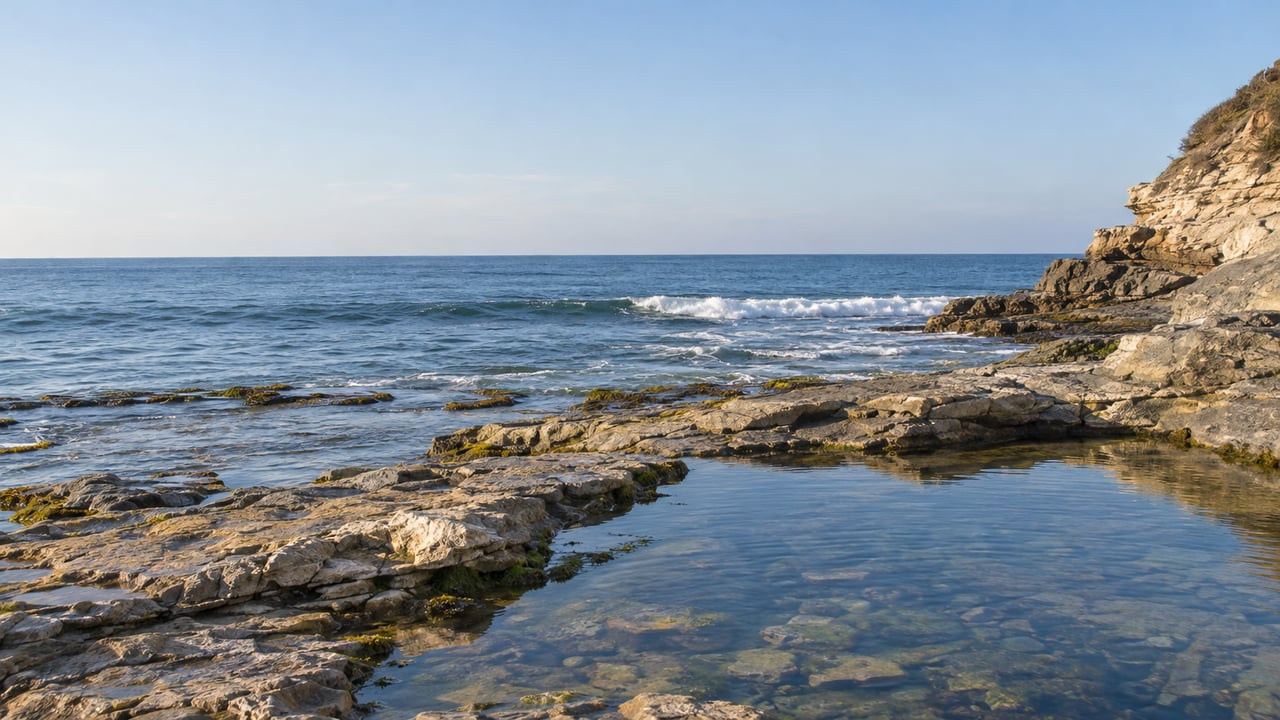
The Times called Flat Rock Point "anvil-shaped," described cliffs rising about 300 feet behind it, and rated its tide pools the best along this stretch. A wide rock platform like this pays off most on the deepest tides, when more of the reef is exposed. The steep fork is also the hardest climb out. Together those point Flat Rock Point toward the January series. At −1.70 feet on Jan. 20 and −1.92 feet on Jan. 21, the reef is about as exposed as it gets all winter, and the afternoon light lasts past 5 p.m.
On the Peninsula's tide pool coast, a minus tide can turn up sea hares, octopus and anemones. Sturdy shoes matter more than a bucket. Everything goes back where you found it, and the pools are for looking.
Rocky Point and the Dominator
About a mile past Bluff Cove is Rocky Point, also called Palos Verdes Point. The rusting remains of the Greek freighter Dominator lie there, as the Times reported. Palos Verdes Magazine describes its Shipwreck Trail as a 4.6-mile out-and-back that is rocky and moderately challenging, with the wreck as the destination. It advises low tide and sturdy footwear. The way toward Palos Verdes Point involves scrambling over boulders under the cliffs, and the footing there is challenging.
At 4.6 miles round trip, this walk needs the earliest start of any spot in this post. The day that fits it best is Jan. 20, when the low reaches −1.70 feet at 2:12 p.m. and leaves about three hours of light. A 2:21 p.m. low on Dec. 22 is the closest December option.
Lunada Bay from above
Lunada Bay has a blufftop trail starting from Paseo del Mar at Avenida Mirola. There is no safe way down to the beach there. On the days when the low arrives too close to sunset to go down to the water, like Thanksgiving's 4:52 p.m. low, the bluff above the bay is a good place to watch the reef appear while the sun goes down.
Before you go
The city's blufftop trails run from the 1300 block of Paseo del Mar to the south city limit. Part of that route was scheduled for work this year. In October 2025 the city awarded Cali State Paving a $236,800 contract to repair the retaining wall on Palos Verdes Drive West, west of Via Montemar. The work was scheduled for late February through July 2026, the Blufftop Trail was to be closed during construction, and a temporary access road was planned from the dead end of Paseo del Mar. Check the city's project page before planning a walk on that stretch. If you're used to the Rancho Palos Verdes trails, the trail closures there work differently from the paths inside Palos Verdes Estates.
The tide times in this post come from NOAA's Los Angeles Outer Harbor station, so pull up the NOAA prediction page the day before you go. If you'd like a guide for a first outing, Cabrillo Marine Aquarium educators lead a free naturalist tidepool walk at Point Fermin in San Pedro on Sunday, Nov. 22, from 12:30 to 2 p.m. It's open to all ages and lines up with the 1:43 p.m. low that starts the November series. Details are on the aquarium's events page.
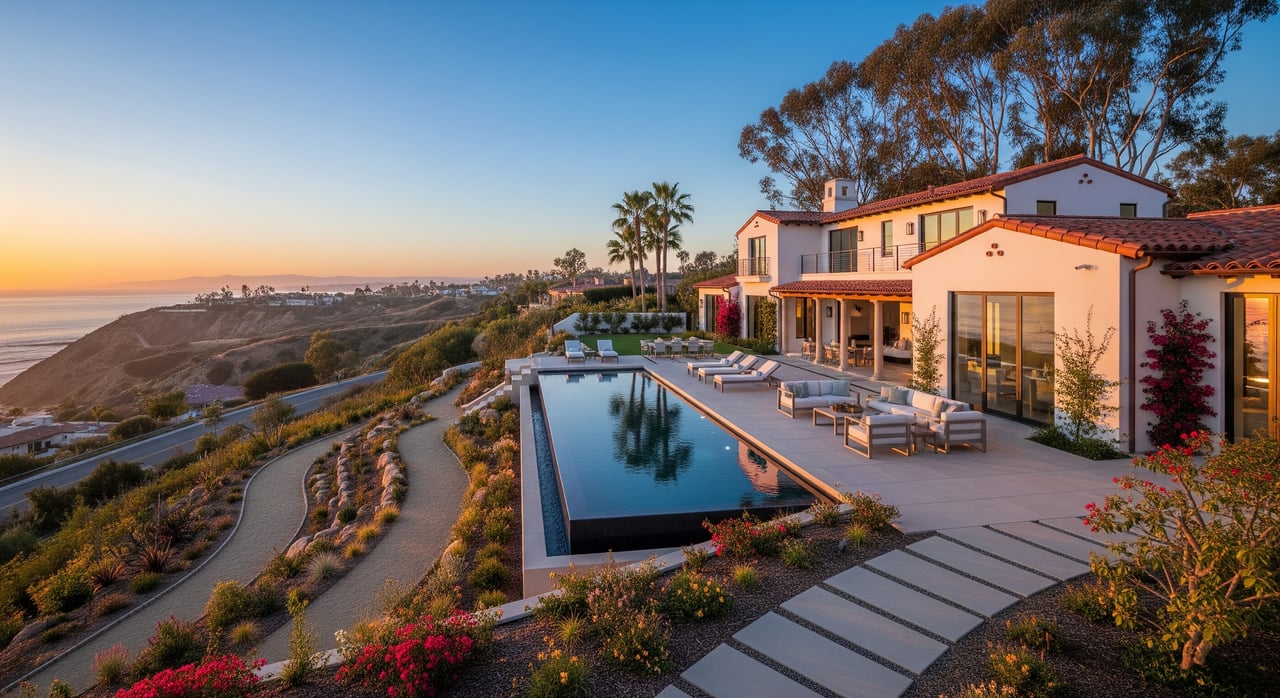
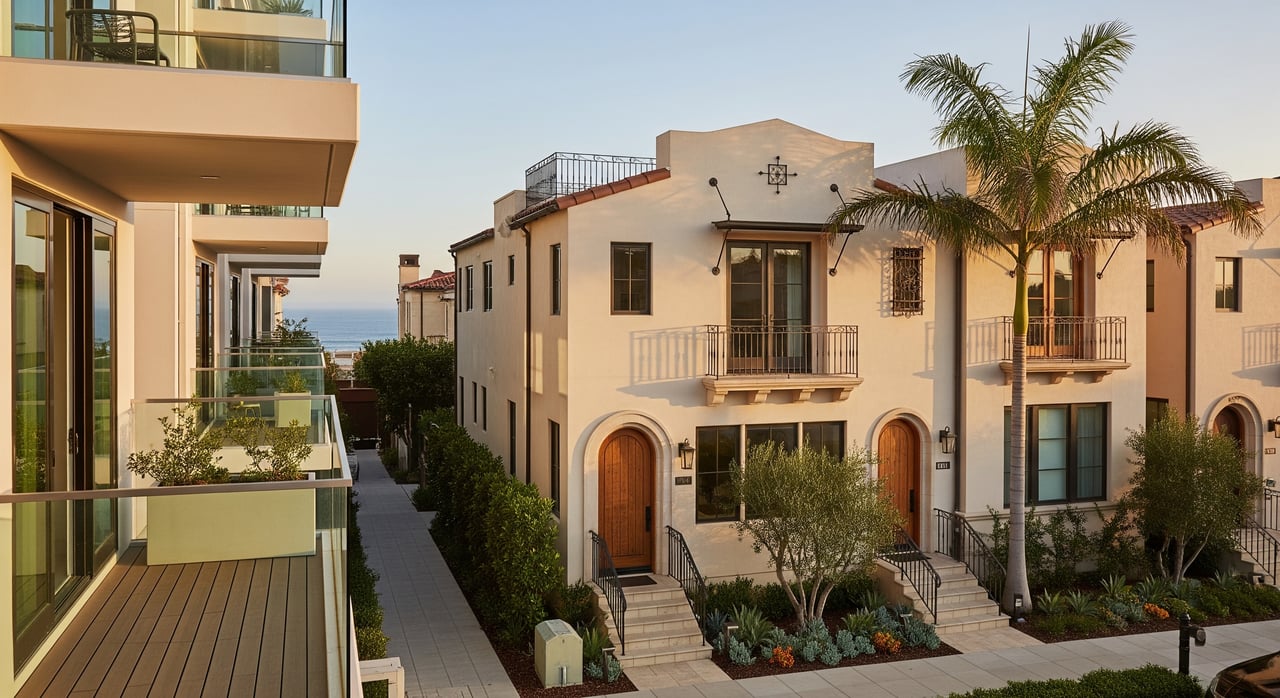
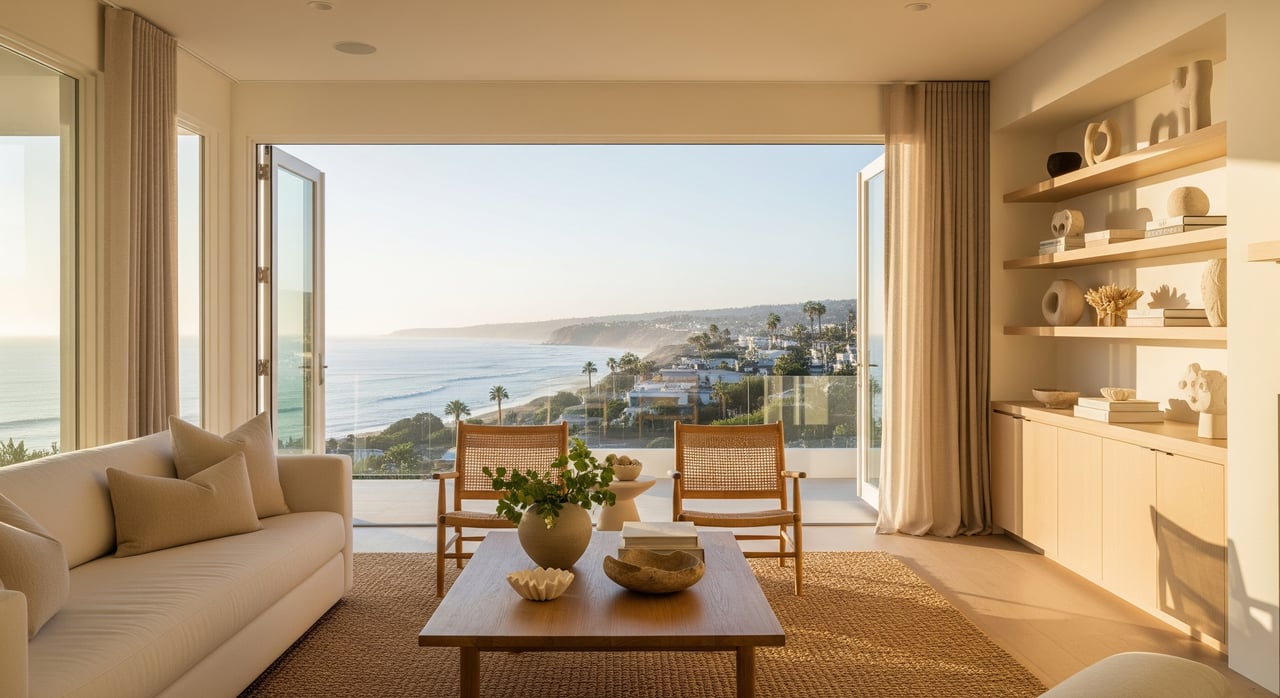
A short walk to Malaga Cove or Bluff Cove is part of how a home along Paseo del Mar is lived in. If you own near the shoreline and want to see how that setting reads in your home's value, Steinbeck Homes can prepare a home valuation built around the details that make your home specific to this coast.