"The Camera Obscura instrument is outside of the parameters of the anticipated lease; its operational use and access are not the responsibility of the selected operator." That sentence comes from the City of Santa Monica's written answers to companies bidding to run a cafe at 1450 Ocean Avenue. It helps explain what is about to happen to one of the most recognizable buildings in Palisades Park. The low mid-century building with the diagonal script on its face is getting a $3 million renovation, a cafe, a deck and a summer as Switzerland's home during the 2028 Olympics. The rooftop lens and darkened room that gave the building its name will be preserved, and they sit outside the cafe lease.
So the plan amounts to two projects under one roof. One is a park concession with a gallery, which the city wants open year-round. The other is a piece of optical equipment from the 1890s that the city has owned since 1910.
A camera that came before its building
The camera is the older of the two. The device, a darkened room where a lens projects a live image of the park and shoreline, dates to the late 1890s, when it ran as a beachfront novelty, according to the Santa Monica Daily Press. The Santa Monica Conservancy says the city bought it in 1910 and moved it to Linda Vista Park, the park we now call Palisades Park. The Conservancy also notes that camera obscuras became popular attractions at seaside resorts in the 19th century, and that the city's purchase was meant to draw visitors to the park, as the Santa Monica Lookout reported.
The building came in 1955. Architect Weldon J. Fulton designed it as the Senior Recreation Center, a gift to the city in memory of Marcellus L. Joslyn's wife, and the camera moved into the new structure. The Conservancy calls the design characteristic of Fulton's mid-century modernism, with its "large-scale diagonal script attached to the building's exterior" and an abstract box camera on a tripod mounted on top. Later the building became the Camera Obscura Art Lab, the city's community arts practice space, which hosted artists-in-residence in its studio room three times a year.
That layered history is part of why the renovation carries preservation language. Palisades Park was designated a historic landmark in 2007, and city procurement documents list the Camera Obscura and the Senior Recreation Center as contributing elements of that landmark.
The Art Lab has already left. City staff told the council it "recently was relocated to Bergamot Station to make the building available for other public activations and eventually construction," the Santa Monica Lookout reported in July. If your weekend routine included a class or open studio on Ocean Avenue, that program now runs out of Bergamot.
What the $3 million is for
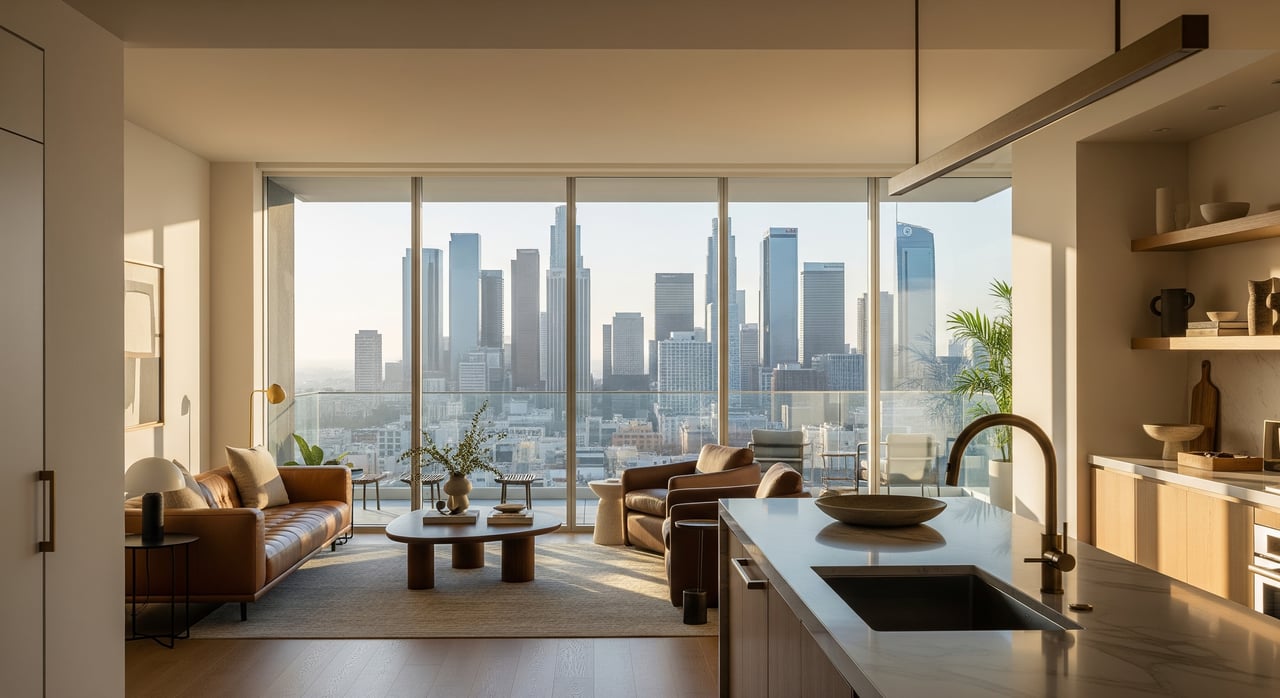
The money is in the budget. The city's adopted FY 2026–28 Capital Improvement Program lists the Camera Obscura Redesign Implementation as project C0928, with a total budget of $3,000,000 from the General Fund, all of it in fiscal year 2026–27. The budget describes converting about 5,000 square feet into a flexible event venue, with upgraded landscaping, an outdoor deck, expanded art studio space and retail components. It also commits to "historic preservation" and "long-term post-Olympic community use."
The cafe is the part neighbors will feel most. The city released a request for proposals on Aug. 20 for an operator to run up to 2,000 square feet of cafe and warming-kitchen space, with proposals due Oct. 1. Another 2,000 square feet or so becomes exhibition space programmed by the city's Cultural Affairs Division, and a new outdoor deck and wraparound patio will look over Palisades Park toward the beach.
The lease terms were left open. The city invited short-term operators for a year or less, long-term operators for three to five years with possible extensions, or a hybrid that would run through the Olympics and then become a longer partnership. Bidders were asked to propose base rent, percentage rent tied to gross receipts, and capital contributions.
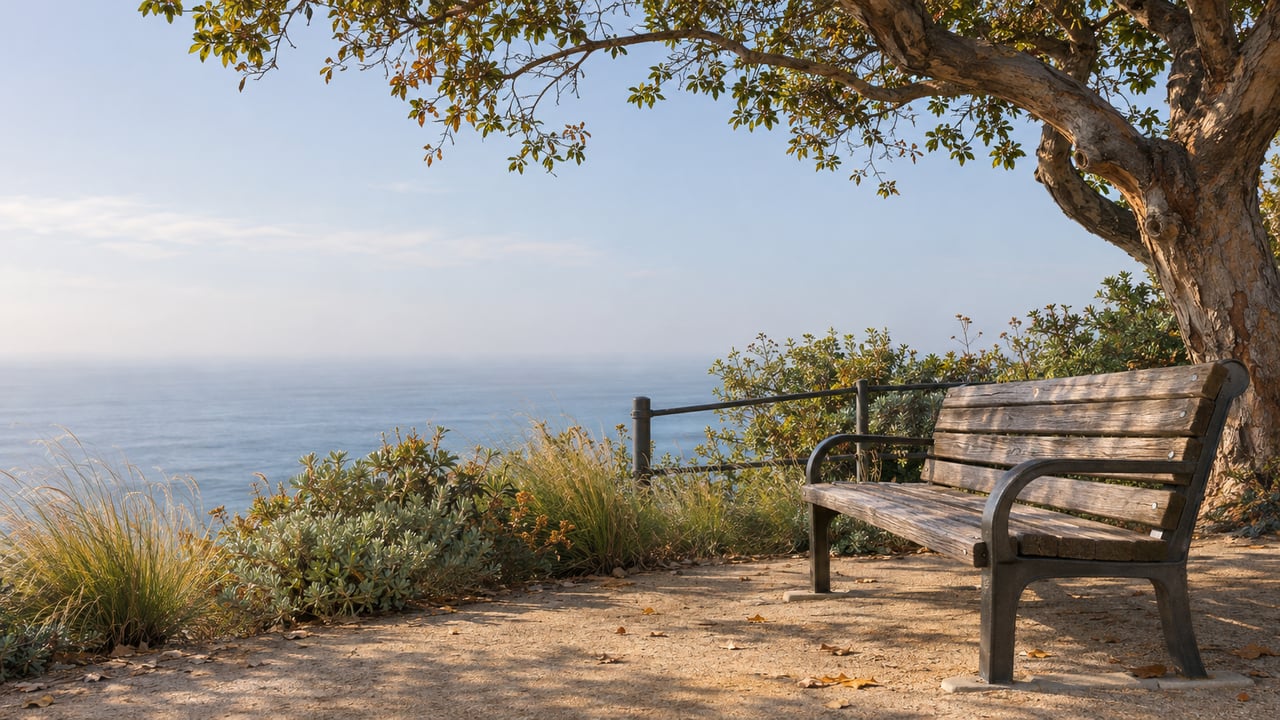
The city's stated goal is modest. Assistant City Manager Susan Cline told the council the Swiss partnership would "build out an actual park concession so that hopefully maybe even next year we could open it as a park concession so people can get a drink or a quick bite to eat," as the Santa Monica Daily Press reported. The renovation is expected to be finished, with the building ready to operate, in summer 2027. For anyone who walks the bluff from the Pier toward Wilshire, that puts a place to sit with a coffee and an ocean view at a stretch of Ocean Avenue where the park has had benches and little else.
Switzerland's summer on the bluff
The Olympics are what got the renovation moving. On May 26, according to the Santa Monica Lookout, the City Council approved a license agreement with Switzerland's Federal Department of Foreign Affairs to turn the building into a public hub before and during the 2028 Games. Switzerland pays a base license fee of $300,000, with an option to pay another $200,000 to expand into adjacent areas of Palisades Park. From about June through September 2028, the building will be the country's official hospitality, cultural, media and event venue.
Locals should not expect a velvet rope. Switzerland has staged a House of Switzerland at every Olympics since the 1998 Winter Games in Nagano, and unlike many national hospitality houses, it is typically open to the general public. City staff said the building would be open to the public free of charge during the activation, with programming centered on "sports, art, food, and culture," the Lookout reported. The Swiss government, which decided in October 2025 to have a presence at the Los Angeles Games, has budgeted roughly 5.5 million Swiss francs, about $6.9 million, for its overall Olympic showing.
If the Swiss connection sounds familiar this week, look across Ocean Avenue. Swiss Winter Village is on the Pier's parking deck through Jan. 3, 2027, under a separate deal the council approved for a holiday market. Our guide to this season's two Santa Monica ice rinks has the tickets and the resident pricing. The Pier deal guarantees the city at least $320,200 or 8 percent of net ticket revenue, whichever is greater. The two deals run on different timelines and leave different things behind. The village packs up in January. The renovated Camera Obscura building stays with the city once Switzerland leaves in fall 2028, an outcome staff described as "a beautified and improved asset to the Santa Monica community as a lasting legacy project," according to the Santa Monica Lookout.
Where the camera fits
The camera is the one piece of the building the lease leaves to the city. The city's cultural venue page says the mechanism is closed to the public except during special events, and the device has been closed to the public since 2020. City staff said the camera obscura will be preserved under the Swiss agreement, according to the Santa Monica Lookout. The bidder answers quoted at the top settle the other half. Whoever runs the cafe will not be running the camera.
That split makes sense for an object like this one. A cafe operator signs up for a few years and a percentage of gross receipts. A lens the city has owned for more than a century is a long-term public responsibility, closer to a monument than a menu item. Keeping it out of the concession means the camera's future does not ride on a private operator's business plan.
After the Games, the city intends to run the site year-round as a community destination with cultural programming, community events and private rentals. The building opened in 1955 as a place where people gathered in the park, and by the end of 2028 the plan is for it to be one again, with a deck, a coffee counter and a gallery around a camera that has been looking out over the same bluff since 1955.
Updating a 1955 building while keeping its original features is the kind of work Johannes Steinbeck pays close attention to, given his background in carpentry and design. If you own a mid-century home near the park and want to know what its original details are worth today, Steinbeck Homes can walk through it with you and prepare a home valuation built around what makes your house distinct.